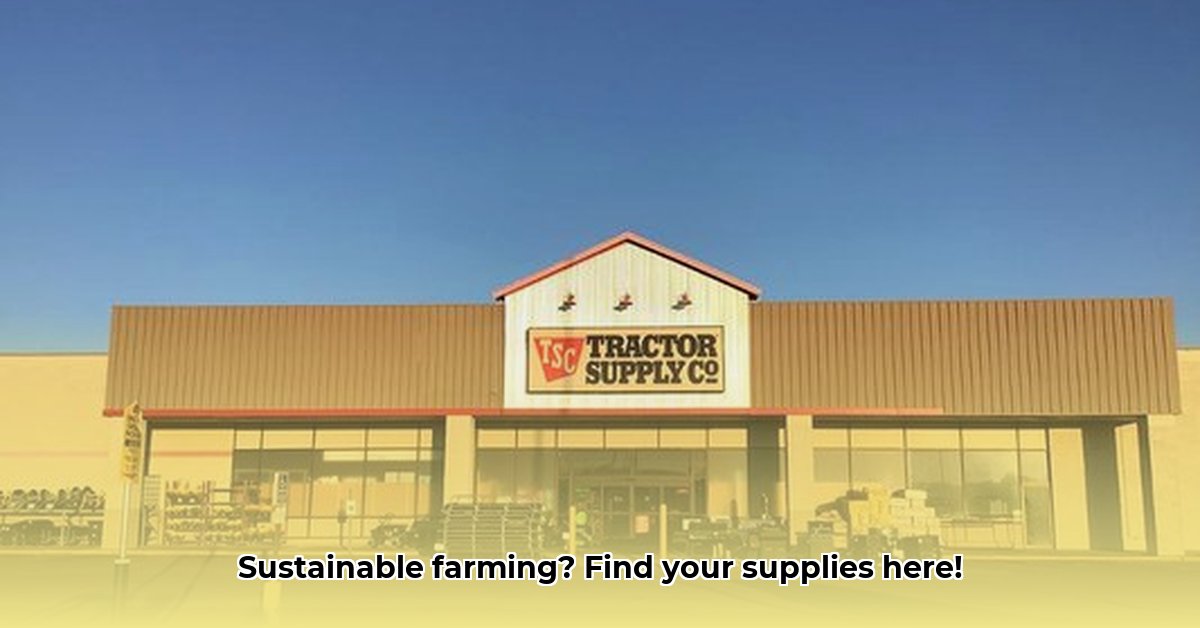
Tractor Supply Borger: A Local Resource, But How Sustainable?
Tractor Supply Company (TSC) in Borger, Texas, is a familiar sight for local farmers and gardeners, providing a convenient one-stop shop for agricultural supplies. But how effectively does this local business support sustainable farming practices? This article explores TSC Borger's role, highlighting both its contributions and areas for improvement. We'll examine product offerings, supply chain transparency, and opportunities for community engagement to cultivate a more sustainable agricultural future in Borger. For examples of other TSC locations, see this similar store.
Accessibility and Convenience: A Boon for Busy Farmers
TSC Borger’s strategic location offers significant convenience to surrounding agricultural areas. This accessibility is particularly valuable during peak seasons, allowing farmers to quickly replenish essential supplies. The reduced travel time saves valuable time and resources. The proximity undoubtedly contributes to its popularity amongst local farmers who value efficiency. One local farmer, speaking anonymously, emphasized the time saved as “a real lifesaver, especially during the hectic harvest.”
Product Range: A Blend of Traditional and Sustainable Options
TSC offers a wide range of products, including animal feed, tools, and gardening supplies. However, the availability of specialized organic feeds and truly sustainable farming products is somewhat limited. While some eco-friendly options exist, a comprehensive selection of sustainable agricultural products might require sourcing from alternative suppliers. This presents both a challenge—for consumers seeking complete sustainable solutions—and an opportunity—for TSC to expand its product line to meet growing demand. This is a common challenge for rural retailers. How can TSC better tailor its offerings to meet the needs of environmentally conscious farmers?
Limitations: The Need for Greater Transparency
TSC's contribution to sustainable agriculture is hampered by a lack of transparency in its supply chain. Detailed information regarding the origin and environmental impact of many products is unavailable. While the use of fertilizers and pesticides isn't inherently unsustainable, the lack of clear labeling regarding their sourcing and potential environmental impacts is concerning. Experts suggest that improved labeling, highlighting sustainable sourcing and environmentally friendly production methods, is crucial. This lack of transparency makes it difficult to fully assess the store's overall environmental footprint. Certain products, like specific pesticides and fertilizers, can have negative environmental consequences if not used responsibly.
Community Engagement: Opportunities for Collaboration
TSC has the potential to significantly promote sustainable agricultural practices through increased community engagement. Workshops on water conservation irrigation techniques or sustainable livestock management could empower local farmers. Collaborations with local agricultural organizations, universities, or government agencies could further expand the reach and impact of these educational initiatives. These partnerships could create powerful learning opportunities and foster the adoption of more environmentally friendly farming methods. How can collaborative efforts position TSC as a leader in sustainable agriculture within the Borger region?
The Path Forward: Cultivating a Sustainable Future
To enhance its contribution to sustainable agriculture, TSC Borger should prioritize several key actions. Expanding its range of organically certified feeds and sustainable products is essential. Improving supply chain transparency by providing detailed information about product sourcing and environmental impact would significantly boost consumer confidence. Local consumers also have a crucial role to play; actively seeking out and supporting businesses committed to sustainable practices, asking questions about origins and environmental impacts, and supporting local farmers markets are critical steps. A concerted effort—involving TSC, consumers, and local organizations—is needed to foster sustainable agricultural practices in the Borger area. What concrete steps can be taken to achieve this shared goal?
Key Takeaways:
- TSC Borger offers convenient access to numerous farming and gardening supplies.
- The current selection of sustainable products needs expansion.
- Collaboration between TSC, consumers, and local organizations is crucial for advancing sustainable agriculture.
- Increased supply chain transparency is vital for fostering consumer trust.
Finding Sustainable Farming Supplies Near You
TSC serves as a convenient local resource, but sourcing comprehensive sustainable agricultural products may require a multifaceted approach. The store's current offerings present both opportunities and challenges for those committed to sustainable farming. How can we create a more robust ecosystem of sustainable resources for Borger farmers and gardeners? The path forward involves a collaborative effort between the retailer, consumers, and local organizations focused on promoting sustainable practices.